Heteroscedastic Machine Learning for Multifidelity Simulation and Test Data with Varying Noise or Variance
On Demand
The engineering simulation and test data used to train machine learning (aka surrogate) models often contains noise or uncertainty that is not uniform across the design space. Some training points may be highly reliable, while others may come from noisier measurements or lower-fidelity simulations. Traditional Gaussian process (GP) models often treat this uncertainty in a simplified way, which can limit model accuracy and reduce confidence in predictions.
This webinar will begin with a brief introduction to GP models, along with a discussion of SmartUQ’s significant advantages in terms of speed, accuracy, and flexibility. This will be illustrated through benchmark results comparing GP in SmartUQ to GP in GPyTorch.
SmartUQ’s new Noisy Kriging Emulator for fitting heteroscedastic (varying noise) GP models that retain and use information about individual training data uncertainties will then be introduced. By accounting for point-specific uncertainty in the training data, this approach enables more accurate surrogate models which can combine information from different data sources with different error or fidelity rates into a single model. Benchmark results comparing SmartUQ’s Noisy Kriging Emulator to the approaches available in GPyTorch for similar problems will also be covered.
Join us for this webinar in which SmartUQ Principal Application Engineer, Gavin Jones, will introduce SmartUQ’s Noisy Kriging Emulator along with a software demonstration on example problems and benchmarks against competing approaches. Attendees will further learn when heteroscedastic modeling is useful, how it differs from standard GP modeling, and how preserving training data uncertainty can improve model accuracy, prediction confidence, and improve test efficiency via targeted data collection.
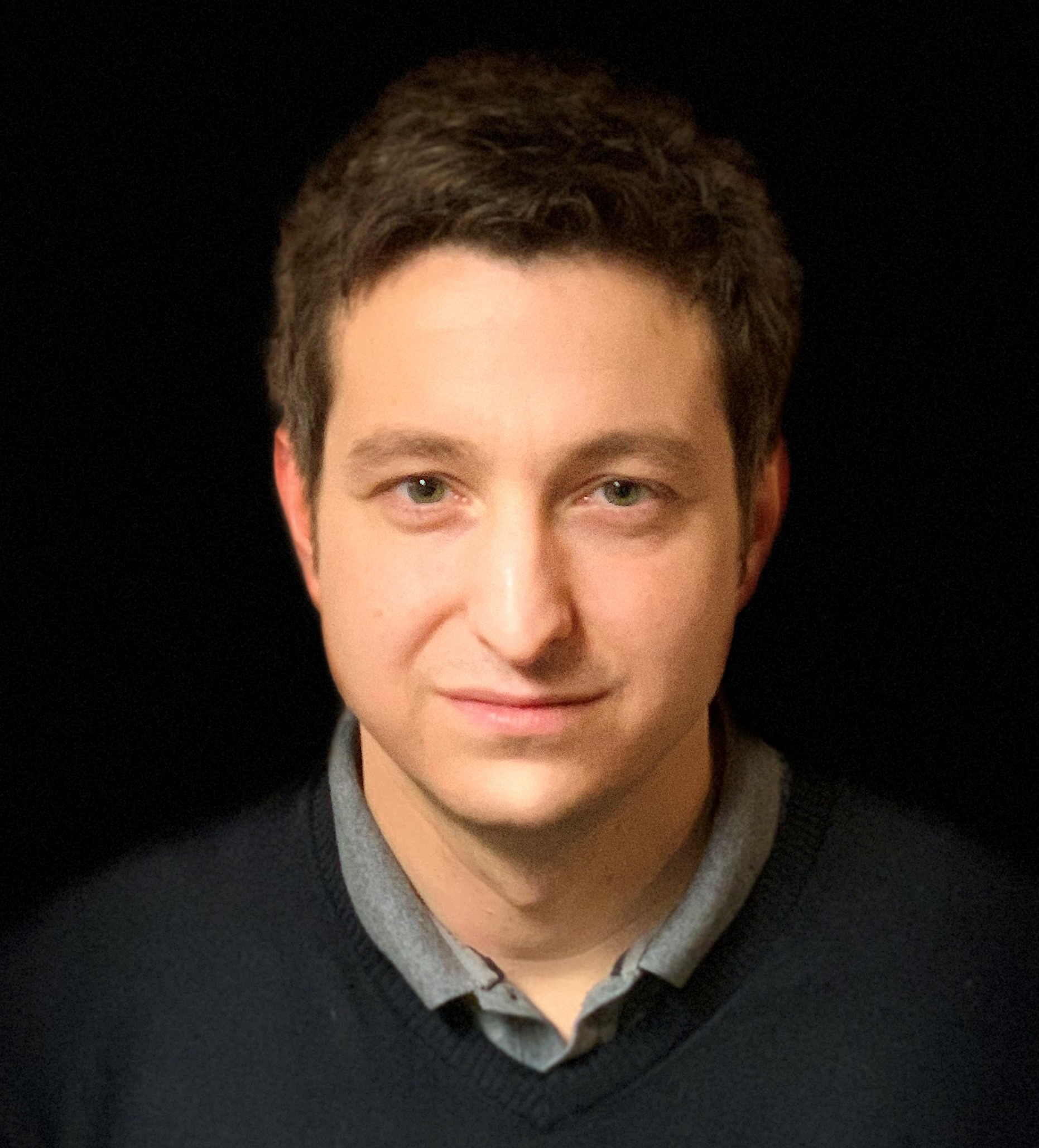
Presented by Gavin Jones, Principal Application Engineer
Gavin Jones serves as a Principal Application Engineer at SmartUQ, where he is responsible for performing simulation and AI work for clients in the automotive, aerospace, defense, semiconductor, and other industries. He is a member of the SAE Chassis Committee as well as the AIAA Digital Engineering Integration Committee. Gavin is also a key contributor in SmartUQ’s Digital Twin/Digital Thread initiative.